The Rise of Trade Nations in Europa Universalis IV
The Rise of Trade Nations in Europa Universalis IV is an intricate tale woven into the fabric of Paradox Interactive’s grand strategy game. Europa Universalis IV (EU4) grants players an expansive canvas to paint their historical ambitions, and among these are the ambitions of trade nations. Trade has been a cornerstone of economic power and influence throughout history, and EU4 provides a rich, detailed simulation of trade mechanics, enabling players to wield trade as a potent tool for dominance.
Trade nations in EU4 are defined by their strategic positioning, dynamic economies, and unique national ideas that leverage trade mechanics to ascend to power. These nations are adept at extracting wealth from trade nodes, investing in trade infrastructure, and employing diplomatic and military strategies to secure and expand their trade networks.
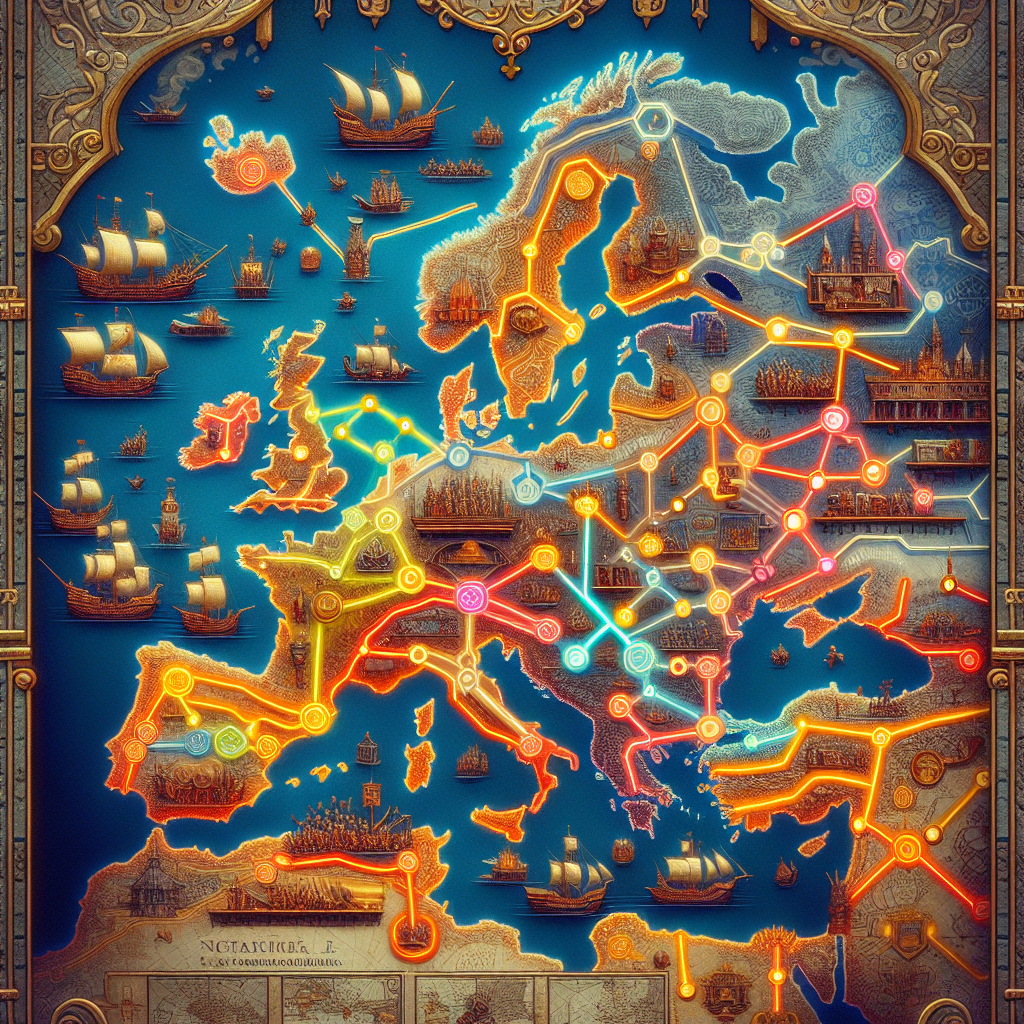
At the core of trade in EU4 is the trade node system, which represents the global network of trade routes. Trade nodes function as hubs where goods are collected and from which trade flows can be directed. Each node has a defined geographical region, and the control over these nodes is vital for accumulating wealth. Trade nations aim to steer trade towards their capitals, maximizing profits and enhancing their economic strength.
Key to the success of trade nations is the concept of trade power. Trade power determines the share of wealth a nation can collect from a trade node. It can be increased through a combination of territorial expansion, investment in trade buildings, assigning light ships for trade protection, and employing merchants strategically. Nations such as the Netherlands, Venice, and Portugal are quintessential trade nations, beginning with significant bonuses to trade power and efficiency.
The mechanics of trade companies further enhance the ability of trade nations to generate income. Trade companies can be established in non-home continent trade nodes, providing significant trade power and additional merchant bonuses without impacting overextension. This is a powerful tool for European trade nations, enabling them to maintain a global presence without direct administrative control over distant colonies.
Adopting a trade-focused strategy allows nations to leverage colonization to dominate trade networks. Colonizing key provinces along trade routes can significantly enhance trade power. Coastal provinces with valuable trade goods and high trade value become prime targets for trade nations. Establishing a colonial empire spanning various continents boosts a nation’s ability to steer trade into its home node, creating a steady flow of income.
Trade ideas, one of the idea groups in EU4, is central to the strategy of trade nations. This idea group amplifies trade efficiency, provides additional merchants, and enhances naval forcelimits, enabling a stronger trade fleet. Nations that embrace these ideas can better capitalize on trade opportunities, enhancing their position as economic powerhouses.
Diplomatic maneuvers are critical for trade nations in maintaining and expanding their trade influence. Forming alliances and trade leagues can provide protection and mutual benefits among smaller trade-centered nations. The Hansa and Venice, for instance, can form trade leagues that unite smaller nations under a common trade agenda, enhancing their collective trade power in key nodes.
The maritime aspect cannot be understated in the rise of trade nations. A formidable navy is a cornerstone of any trade empire, safeguarding trade routes and projecting power across the seas. Committing resources to develop a strong fleet of light ships that protect and extend trade power is essential. Moreover, naval dominance allows trade nations to enforce embargoes, establish blockades, and secure control over crucial straits and chokepoints.
The interaction between trade and technology also plays a significant role in elevating trade nations. Emphasizing trade technology and embracing advancements in shipbuilding and maritime exploration can extend a nation’s reach into uncharted territories, discovering new trade routes and opportunities for wealth accumulation. Advances in trade technology also improve trade efficiency, maximizing returns from trade node investments.
In addition to external expansion, internal development is vital for the prosperity of trade nations. Improving the infrastructure in coastal provinces, investing in production efficiency, and developing the economy through carefully managed buildings can ensure a steady flow of trade income. Trade depots, marketplaces, and stock exchanges are pivotal buildings that enhance trade power and province development.
Religion can also impact the effectiveness of trade nations. Certain religions offer trade-related benefits. For example, Protestant nations can leverage the economic benefits that come with their religious ideas, while Confucian nations can balance harmony for economic modifiers. Religious policies can influence trade relationships and the stability needed for sustained economic growth.
Competent administrative management is required to maintain a stable and prosperous trade nation. Balancing the budget, managing inflation, and investing wisely in trade and military endeavors ensures the long-term viability of a trade-focused strategy. Economic policies should be geared towards maximizing trade profits while minimizing unnecessary expenditures or military overreach.
Over time, trade nations can evolve into influential global powers. The wealth generated from trade activities can finance powerful armies, fund technological advancements, and support extensive diplomatic activities. Nations that effectively exploit the trade mechanics can transform into formidable entities that influence the global stage economically and politically.
Military conflicts, while often secondary to economic expansion for trade nations, cannot be ignored. Control over rich trade nodes and strategic points can frequently invite conflict, and being prepared for wars of trade or territorial disputes is a necessity. Strategic use of military alliances, mercenary forces, and careful timing of conflicts can allow trade nations to secure their interests without unnecessary drain on resources.
Europa Universalis IV provides a rich tapestry of opportunities for trade nations to explore, expand, and exploit trade networks to rise to prominence. Mastering the blend of economic management, strategic diplomacy, and naval supremacy is crucial for players seeking to build enduring trade empires. Through astute management and strategic foresight, trade nations have the potential to shape the course of history within the grand strategy framework of Europa Universalis IV.














Post Comment