Understanding the StarCraft II Meta Game
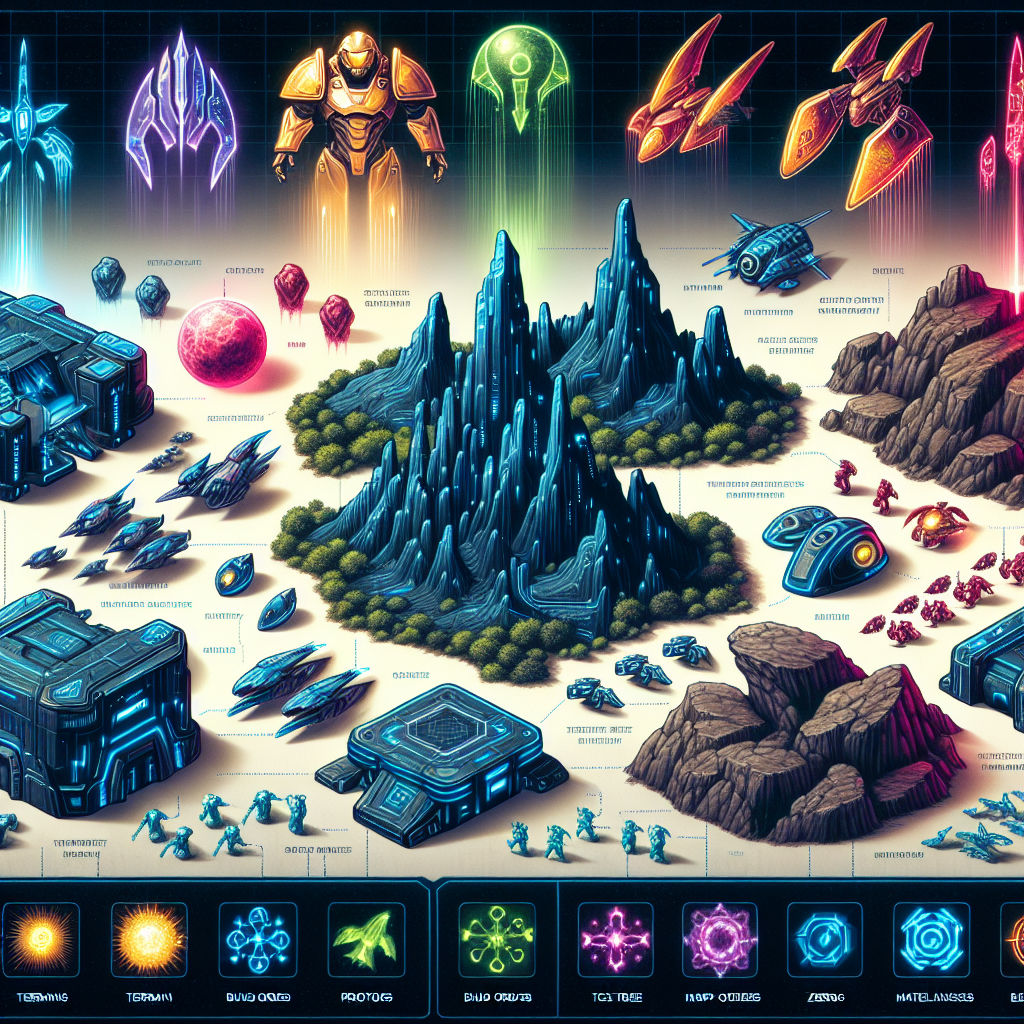
Understanding the StarCraft II meta game requires a deep dive into the strategies, tactics, and player behaviors that evolve as part of the game’s competitive landscape. The term “meta” in StarCraft II (SC2) refers to the most effective strategies and styles of play that are shaped by the ongoing interactions within the community of players and the professional scene. This fluid aspect of SC2 is heavily influenced by game balance changes, map rotations, and the emerging trends among top-tier players.
The core pillar of SC2’s strategic depth is its three distinct races: Terran, Zerg, and Protoss, each bringing its unique strengths and weaknesses. Understanding the meta involves analyzing how players choose to navigate these differences. Terran players often favor a bio or mech style, depending on their adaptability and opponent. Bio focuses on mobility and aggression using units like Marines and Marauders, often complemented by Medivacs for sustainability and drops, aiming for constant pressure across the map. Meanwhile, mech emphasizes a slower, more defensive approach with heavy-hitting units like Siege Tanks and Thors, creating formidable defensive lines that are difficult for opponents to breach.
Zerg, the reactive race, thrives on adaptability and overwhelming numbers. Zerg players typically open with an economic focus, such as a hatch first strategy, to capitalize on their ability to produce units en masse. Depending on the opponent’s strategy, the Zerg player may pivot between tech options like Mutalisks for map control and harassment, Roach-Ravager for mid-game strength, or transitioning into the late-game power of Brood Lords and Ultralisks. The Zerg meta frequently revolves around countering the opponent’s strategy effectively while maintaining the balance of tech and economy.
Protoss, the high-tech race, has seen its meta evolve towards diverse build orders that emphasize either early aggression or solid macro foundations. Chrono boost lets Protoss adapt quickly to changing game states, impacting everything from economy to tech paths. Strategies such as blink stalker plays, adept harass, or a fast transition into tech-heavy compositions like Colossi or Templar are common. Protoss players often rely on robust defensive capabilities and a tactical approach to engagements, leveraging force fields and disruption abilities to gain an edge.
In the realm of competitive SC2, players constantly innovate to find optimal ways to exploit the current game environment. These shifts are often initiated by balance patches that tweak unit strengths, costs, or abilities, forcing players to adapt their strategies. When a new patch is released, it is not uncommon to see an initial meta upheaval, with players experimenting to uncover the most effective strategies.
Map pool rotations also significantly influence the meta. The geographical layout of maps can favor certain strategies or races depending on factors such as natural expansions, rush distance, choke points, and high ground advantages. For instance, maps with wide-open thirds might favor Zerg, enabling them to spread creep more effectively, whereas maps with multiple cliff paths may benefit Terran with their drop potential or Protoss with strategic pylon placements.
The community plays a crucial role in the evolution of the meta. Online forums, professional tournaments, and platform leaderboards act as stages for emerging strategies and groundbreaking plays. Players frequently analyze replays of top players, imitating and iterating on successful builds and techniques. Streams and educational content produced by renowned players help disseminate knowledge throughout the community, fostering an ever-evolving meta.
Moreover, the psychological aspect of the meta cannot be overlooked. Players often engage in mind games, adjusting their style between matches in a series. This approach includes bluff strategies, feigned aggression, or hidden tech paths designed to catch the opponent off-guard. Knowing an opponent’s previous tendencies or preferences allows players to prepare specific counter-strategies, adding a layer of depth beyond mechanical skill.
The professional scene is a significant catalyst for meta evolution. Popular tournaments and leagues such as the Global StarCraft II League (GSL) or the World Championship Series (WCS) showcase the cutting-edge strategies employed by the best players in the world. As these events unfold, new trends are rapidly adopted by the broader community. When a professional player executes a novel strategy successfully, it often becomes a staple in the competitive meta.
Adaptability is the hallmark of proficient StarCraft II players in navigating the meta terrain. Successful players demonstrate the ability to recognize shifts in the meta and adjust their playstyles accordingly. For instance, during eras where aggressive early-game strategies dominate, players might focus on refining their defensive mechanics and scouting to thwart early pushes. Conversely, in periods dominated by macro-heavy games, players might prioritize economic optimizations and strategic transitions for the late game.
In conclusion, understanding the StarCraft II meta game is akin to mastering a complex and ever-changing puzzle. Each element—race dynamics, maps, balance changes, and the psychological warfare between players—combines to keep the game challenging and exciting. The meta is not static but a living entity shaped by player actions and innovations, ensuring that every match is a unique contest of wit and skill. As the game continues to evolve, both casual and competitive players constantly adapt to new strategies, keeping the spirit of StarCraft II alive and vibrant in the esports world.








Post Comment