Understanding Difficulty Levels in Temple Run 2
Understanding Difficulty Levels in Temple Run 2
Navigating the fast-paced world of Temple Run 2 requires not only quick reflexes but also a strategic approach to its varying difficulty levels. As one of the most popular endless runner games available on mobile platforms, Temple Run 2 has captured the hearts of millions through its engaging gameplay mechanics. The game’s difficulty is intricately designed to challenge players progressively, keeping them engaged and improving their skills as they play. Let’s delve into the complexity of these difficulty levels and how they impact your gaming experience.
Basic Gameplay Mechanics
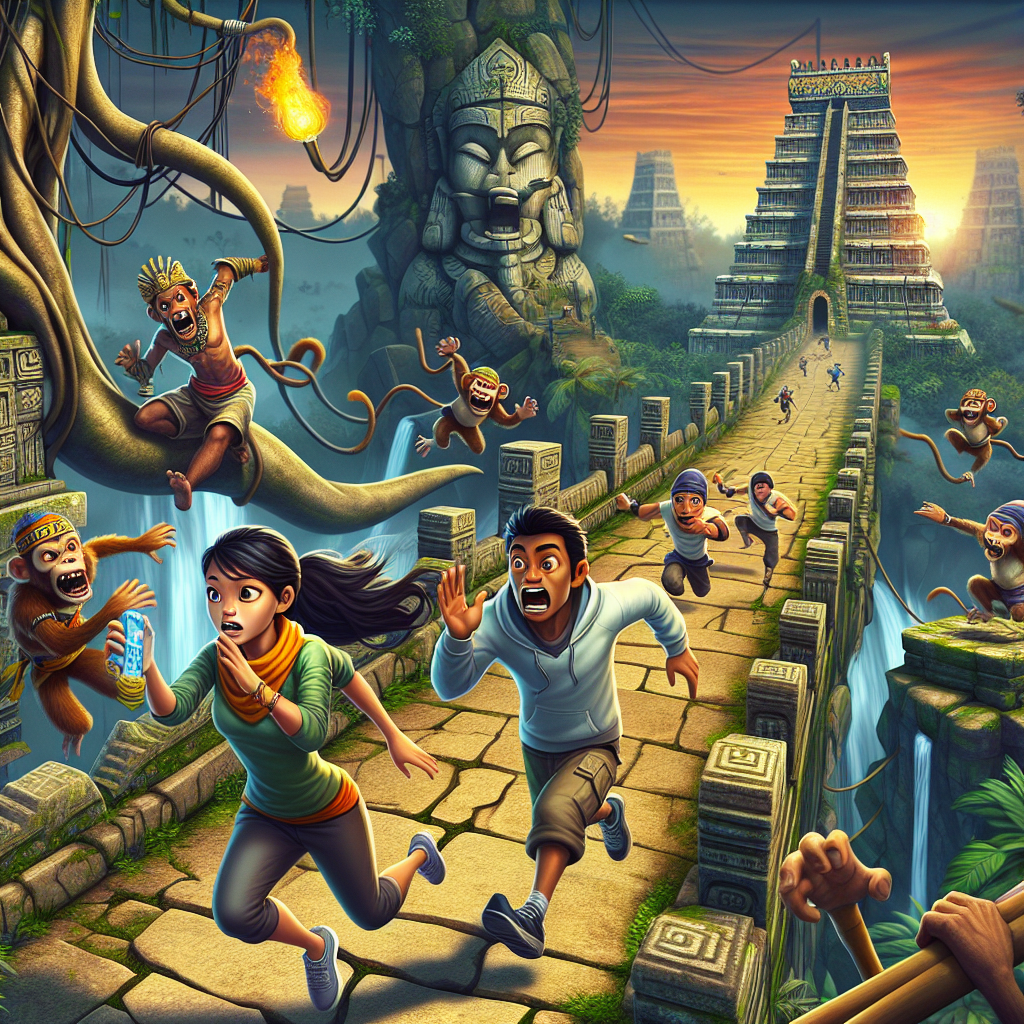
Temple Run 2 builds on the foundational mechanics of its predecessor, incorporating elements that enhance user engagement. The primary objective remains the same: navigate your character through an unending path filled with obstacles while being pursued by demonic monkeys. The controls are simple; swiping left or right to turn, up to jump, and down to slide. Tilting the device allows players to move side to side to collect coins, a significant part of the score-building technique.
Progressive Difficulty
The progression of difficulty in Temple Run 2 is a masterpiece in itself. Unlike static difficulty games, Temple Run 2 progressively increases the difficulty as the player survives longer. This dynamic scaling ensures that the game remains challenging irrespective of how skilled the player becomes. Key factors contributing to this increasing difficulty include the speed of the game, complexity of obstacles, and the intensity of turn sequences. Initially, players are introduced to relatively simple tracks where there is ample room for maneuvering, but as the distance covered increases, the challenges become more intense.
The Role of Obstacles
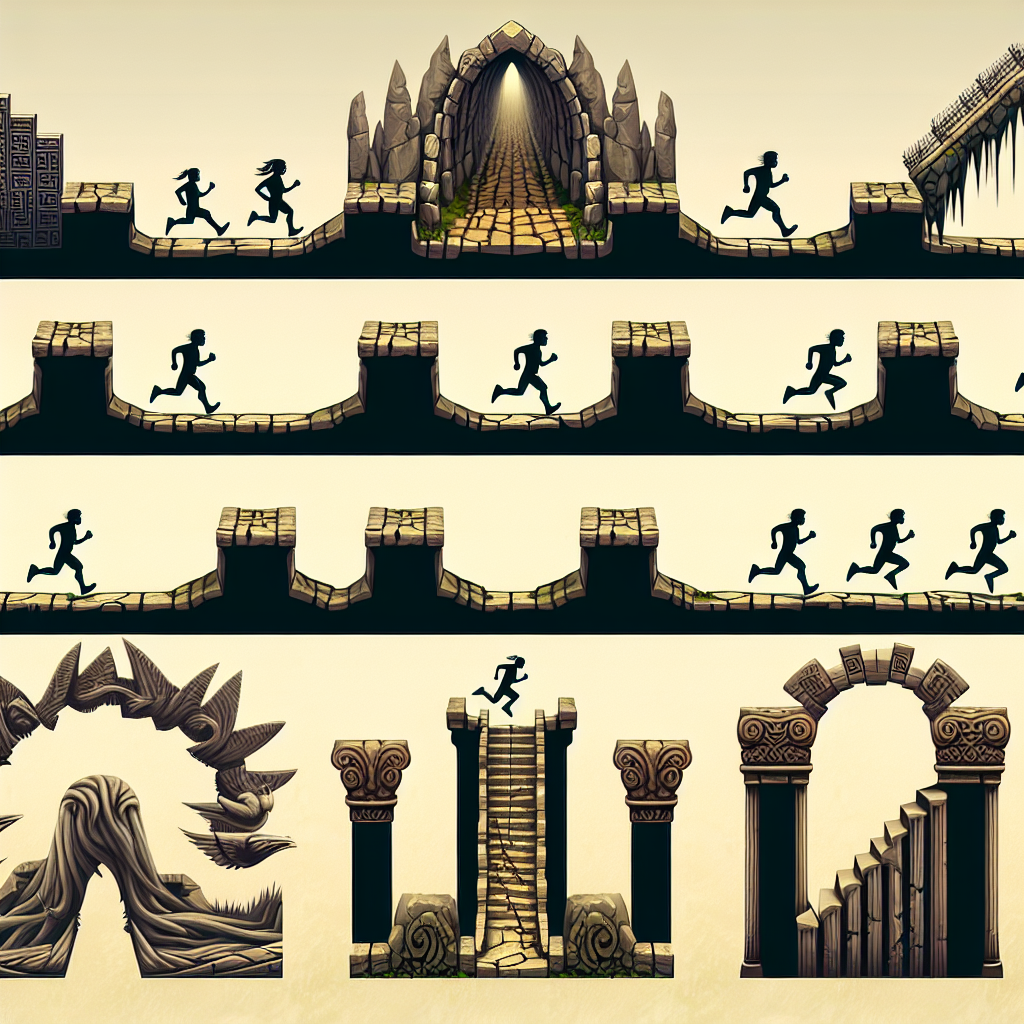
Obstacles in Temple Run 2 are diverse and designed to test different aspects of a player’s skill set. From avoiding static barriers such as tree trunks and rocks to dynamic ones like zip lines and mine carts, each obstacle requires a unique set of actions. Initially, the spacing between obstacles is generous, but as one progresses, obstacles appear more frequently and in rapid succession, necessitating quicker reflexes and decision-making.
Players must develop a keen sense of timing to perfectly execute jumps or slides. Additionally, environmental changes, such as narrow pathways over cliffs or waterways, mean that players must also focus on precision while tilting their devices. This combination of diverse obstacle types ensures that players are constantly adapting to new challenges.
Increased Speed
As the game progresses, not only do the obstacles increase in frequency and complexity, but the speed of the character also rises. This escalation in speed serves as a primary driver for the difficulty level. The longer a player survives, the faster the game becomes, reducing reaction times and increasing the likelihood of errors. The acceleration, however, occurs gradually, allowing players a fair chance to adapt to the rising challenge.
Speed management becomes an essential skill, where players must balance between collecting power-boosting coins and navigating increasingly complex terrains. The gradual acceleration also means that players are encouraged to perfect their runs through practice, as mastery over speed leads to higher scores and longer runs.
Power-Ups and Their Impact
Temple Run 2 is known for its variety of power-ups, which play a crucial role in managing game difficulty. Power-ups like the coin magnet, boost, shield, and score multiplier provide temporary advantages by either simplifying the current challenges or amplifying the player’s abilities. Expert players strategically deploy these power-ups to navigate through especially tough segments of the game, adding another layer of strategy to the otherwise reaction-based gameplay.
The selection of which power-ups to upgrade first also reflects on how players manage difficulty. Investing in a boost power-up, for example, allows players to bypass challenging segments entirely, albeit for a short duration. Learning to effectively use these power-ups at the right moments can significantly influence how far one progresses.
Character Abilities and Market Influence
The introduction of character-specific abilities in Temple Run 2 further adds complexity to the game. Selecting the right character based on their unique skill set can provide advantages in handling increased difficulty. For instance, some characters may offer bonuses that can slow down the game or improve power-up effects. Adjusting your character choice based on the difficulty can make a significant difference in performance.
The in-game market, where players can upgrade abilities and purchase power-ups with collected coins, also strongly influences the game’s difficulty. Players who invest time in understanding which upgrades to prioritize can tailor their run approach, making higher levels of difficulty more manageable. This strategic element of resource management adds depth to the game, encouraging players to engage more deeply with the various systems in place.
Feedback Loop and Improvement
Temple Run 2’s design fosters a feedback loop where players learn from each run, improving their skills over time. With each failure, players gain insights into better strategies and reflex timing. The game’s escalating difficulty encourages repeated play, as players adapt and overcome previous obstacles, enhancing their overall skills.
The incorporation of achievements and daily challenges offers additional incentives for players to continue honing their skills. By engaging with these elements, players can unlock new characters and bonuses, providing tangible rewards for improving their proficiency.
Community and Competitive Play
The competitive nature of Temple Run 2 is heightened through leaderboards and social connectivity, allowing players to compare their high scores with friends and global participants. This social aspect introduces an additional layer of difficulty as players strive not only to beat the game but also to surpass other players. Achieving a top spot on the leaderboard becomes a compelling goal, motivating players to perfect their runs.
Online communities and forums dedicated to Temple Run 2 also offer tips and insights into handling higher difficulty levels. Players often share strategies and walkthroughs for overcoming specific challenges, fostering a collaborative environment that enhances the overall gaming experience.
In summary, understanding and mastering the difficulty levels in Temple Run 2 is an intricate balance of strategy, skill, and resource management. By progressing through progressively challenging environments, utilizing power-ups wisely, and continuously improving through practice, players can extend their runs and achieve higher scores, providing a rewarding and enduring gaming experience.










Post Comment