The Importance of Ray Tracing in Rift Apart
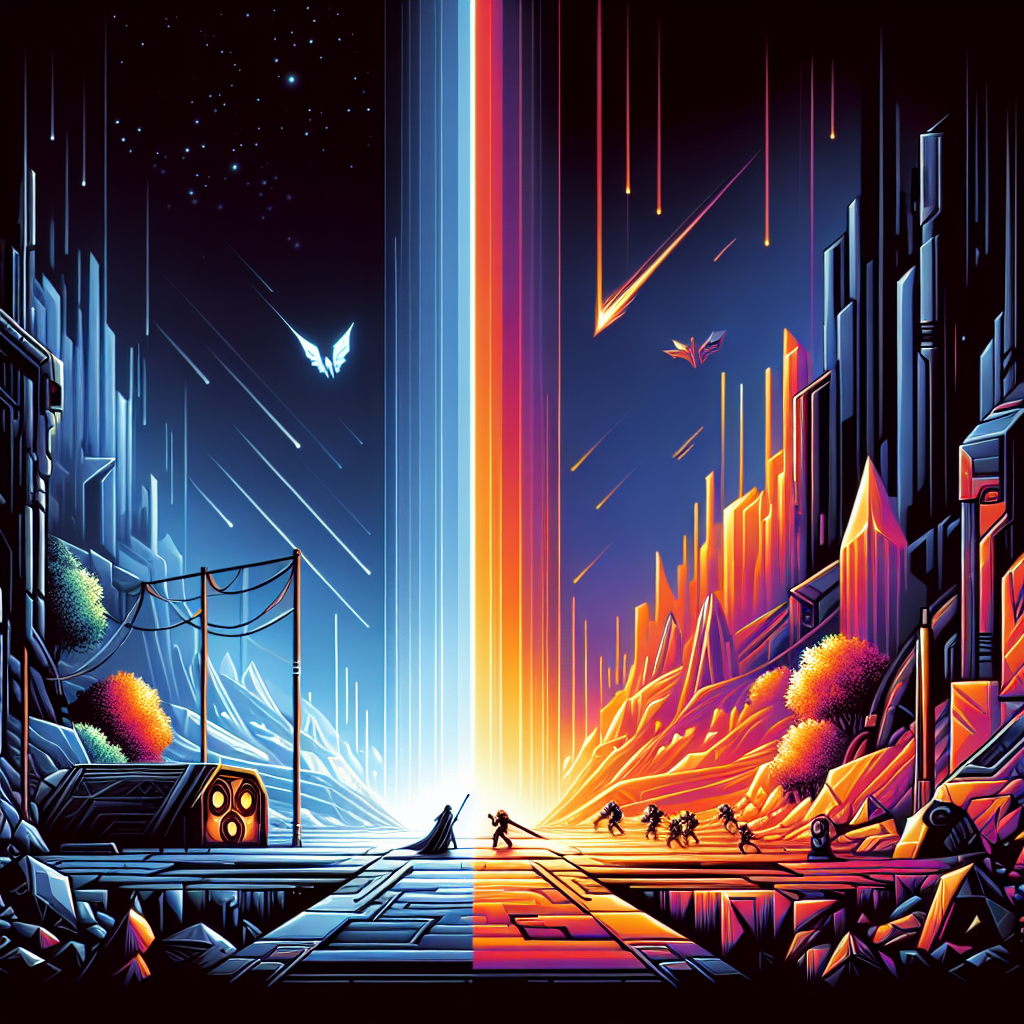
In the ever-evolving landscape of video game graphics, one of the most transformative technologies to emerge in recent years is ray tracing. This advanced rendering technique has begun to redefine the standards of visual fidelity in gaming, enabling an unprecedented level of realism. Among the prominent showcases of this cutting-edge technology is “Ratchet & Clank: Rift Apart,” a game that epitomizes the potential of ray tracing in the realm of console gaming. By exploring how ray tracing is integrated into “Rift Apart,” we can understand its importance and the ways it enhances the gaming experience.
To grasp the significance of ray tracing, it’s essential to comprehend what the technology entails. Ray tracing is a rendering technique that simulates the way light interacts with objects in the real world, thereby producing more realistic images. Unlike traditional rasterization, which approximates how light behaves, ray tracing calculates the actual paths light rays take as they bounce off surfaces. This allows for more accurate depictions of shadows, reflections, refractions, and global illumination.
In “Ratchet & Clank: Rift Apart,” ray tracing is employed to heighten the sense of immersion and authenticity in its fantastical universe. The game takes players on a visually stunning journey through diverse environments, each teeming with vibrant colors and intricate details. The application of ray tracing is crucial in elevating these elements, making the game not just a spectacle of art direction but also a marvel of technical accomplishment.
One of the most visible benefits of ray tracing in “Rift Apart” is its treatment of reflections. In video games, reflections have traditionally been problematic to render with high accuracy due to their computational complexity. However, thanks to ray tracing, “Rift Apart” presents reflections that are not only precise but also dynamic. Surfaces such as polished metal, glass, and water react to light in a more lifelike manner. This dynamism is critical, especially in a game where the environment is a significant part of the storytelling. The bustling cityscapes or metallic corridors in the game, with their realistic reflections, contribute to an impactful and believable world.
Shadows are another area where ray tracing brings remarkable improvements. In “Rift Apart,” shadows cast by objects are soft and diffuse, and they vary appropriately with distance and light sources, unlike the often hard-edged shadows produced by conventional rendering methods. This subtle enhancement helps in creating depth and texture, allowing players to perceive spaces in the game more naturally and intuitively. By realistically simulating how shadows interact with multiple light sources, the game achieves a level of visual coherence that maintains player immersion.
Global illumination is another core element where ray tracing shines. In this context, it refers to the simulation of light bouncing off surfaces and contributing to the ambient light in the scene. In “Rift Apart,” this manifests through detailed and nuanced lighting effects, where light can interact with different surfaces, creating complex meshes of illumination. This doesn’t only enhance the visual aesthetic but also affects gameplay. For example, nuanced changes in lighting can guide players through pathways or highlight areas of interest, subtly influencing the player’s exploration and interaction with the game world.
Color accuracy and ambient occlusion are also areas where ray tracing contributes significantly. “Rift Apart” uses ray tracing to ensure that colors are rendered more vividly and realistically. Ambient occlusion, which shades corners and crevices that light does not easily reach, adds additional depth to scenes. The game leverages these capabilities to craft scenes that are richer and more visually striking, pulling players deeper into its universe.
The development of “Ratchet & Clank: Rift Apart” illuminates the scalability of ray tracing technology on new generation consoles like the PlayStation 5. The PS5’s hardware capabilities play a crucial role in realizing the potential of ray tracing, with its powerful GPU designed to handle the computational demands of real-time ray tracing. The combination of hardware and software optimizations comes together in “Rift Apart,” demonstrating how console gaming can rival high-end PC gaming in terms of graphical output.
Ray tracing in “Rift Apart” also aligns with broader trends in the gaming industry, where developers are increasingly focusing on visual storytelling. With its enhanced realism, ray tracing allows game designers to tell more compelling stories by focusing on atmospheric details and mood-setting. Players are likely to find themselves more emotionally invested in the narrative, as the visually rich environments support the overall storytelling experience.
Moreover, the use of ray tracing in this game sets a benchmark for future titles. As developers continue to push the boundaries of what’s possible visually, ray tracing is likely to become a standard feature in AAA games. Its implementation in “Rift Apart” serves as a pioneering example of what’s achievable, encouraging other developers to leverage this technology to enhance their game worlds.
Ray tracing’s impact extends beyond aesthetics, influencing gameplay mechanics as well. In “Rift Apart,” visual cues enhanced through ray tracing can guide a player’s decision-making process or alert them to hidden dangers, adding layers of strategy and interaction. By creating environments that are both visually stunning and functionally informative, ray tracing contributes to a more holistic gaming experience.
The importance of ray tracing in “Ratchet & Clank: Rift Apart” underscores a crucial evolution in gaming technology, pivoting towards experiences that are both visually resplendent and technologically sophisticated. It showcases how advanced graphics, powered by ray tracing, can facilitate deeper storytelling, increased immersion, and more engaging gameplay. As the industry continues to embrace this technology, players can anticipate a future where the lines between games and reality blur even further, paving the way for a new era of digital storytelling and interactive entertainment.





Post Comment