Ellie’s Journey: Character Development in The Last of Us Part II
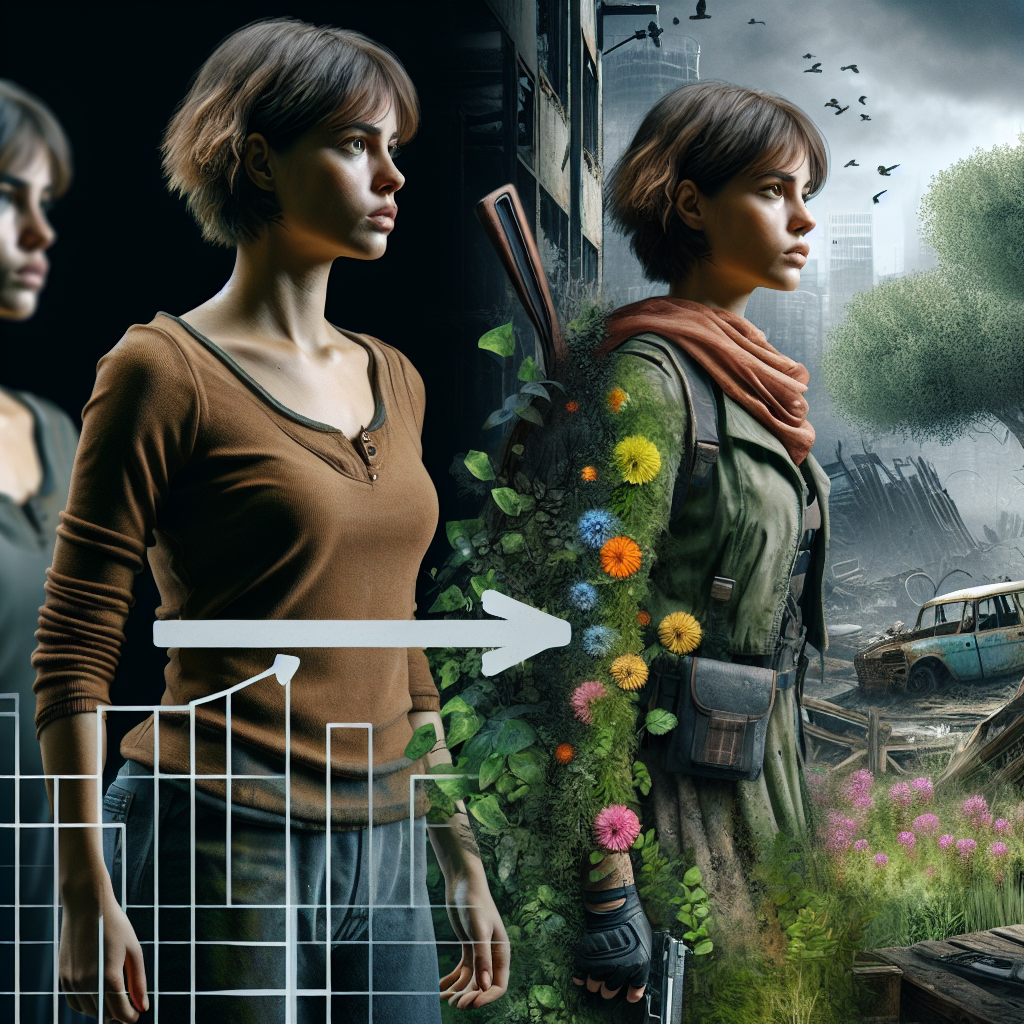
Ellie’s character development in “The Last of Us Part II” stands as one of the most profound narratives in modern video gaming. At the heart of this adventure lies a complex exploration of trauma, revenge, and ultimately, redemption. As players delve into the harrowing journey of Ellie, they witness a metamorphosis shaped by pain and the relentless pursuit of justice.
Initially introduced as a secondary character in the original game, Ellie commands the spotlight in this sequel. Her transformation from a hopeful, spirited teenager into a hardened, deeply conflicted young woman forms the crux of the storyline. Driven by an insatiable thirst for vengeance after the brutal murder of her surrogate father figure, Joel, Ellie’s journey is personal, raw, and transformative.
Ellie’s metamorphosis is expertly crafted through a combination of narrative storytelling and gameplay mechanics. From the outset, players are drawn into Ellie’s world through intimate moments that reveal her vulnerabilities and strengths. The depth of her character is meticulously developed through flashbacks—providing invaluable insights into her past, her relationship with Joel, and her formative years.
One of the most striking aspects of Ellie’s character is the juxtaposition of her vulnerability and resilience. Her youthful optimism is replaced by a grim determination, fueled by loss and the harsh realities of her environment. This shift is palpable and emotionally charged, as players can feel the weight of her experiences shaping her actions and decisions at every turn.
The physical manifestation of Ellie’s journey is apparent in her interactions with the world around her. The game’s environment—the post-apocalyptic wasteland of Seattle—is unforgiving, yet beautiful. It serves as both a backdrop and a character in itself, reflecting Ellie’s internal turmoil. Her familiarity with violence is in stark contrast with the tender moments scattered throughout her journey—creating a rich tapestry of emotional highs and lows.
Crucially, Ellie’s development is complemented by her interactions with other characters. Her relationships are multi-dimensional and complex, adding layers to her personality. Dina, Ellie’s love interest, serves as an anchor—a reminder of what humanity can offer despite the surrounding chaos. Through Dina, players see glimpses of Ellie’s softer side, her laughter, and her capacity for love in a world so devoid of it.
Tommy, Joel’s brother, further influences Ellie’s path. His own quest for retribution mirrors Ellie’s, serving as both a catalyst and a cautionary tale. Their interactions are fraught with tension, mirroring the profound impact of Joel’s death on both characters. Ellie’s choice to continue her mission, even when it drives a wedge between her and Tommy, underscores her relentless pursuit and provides a stark commentary on the costs associated with vengeance.
The introduction of Abby, Ellie’s nemesis, adds a riveting layer to the narrative. Initially, players might view Abby solely as an antagonist; however, as the story unfolds, the lines blur. Abby’s own journey of revenge provides a poignant counter-narrative to Ellie’s path, highlighting the cyclical nature of violence. This dual perspective challenges players to confront their preconceived notions of right and wrong and to question Ellie’s actions and motivations.
Throughout the game, Ellie’s internal conflicts are mirrored through her physical challenges and battles. She faces relentless enemies, both human and infected, in a world where moral ambiguity reigns supreme. Her proficiency in combat, stealth, and survival instinct exemplify her evolution into a formidable force. As players guide Ellie through increasingly perilous situations, they experience her growth firsthand.
The music and sound design further elevate Ellie’s character arc. Gustavo Santaolalla’s haunting score envelops Ellie’s journey, adding an emotional resonance that amplifies her struggles and triumphs. The melancholic notes often underscore moments of reflection, allowing players to immerse themselves in Ellie’s psyche fully.
Ellie’s character development is also reflected through subtle visual cues and changes. Her outward appearance—aging scars, tattoos, and her weary expression—tells a story of its own. Each injury, each mark, serves as a testament to the battles fought and lost and the indelible scars left on her soul.
In narrative terms, Ellie’s journey poses profound questions about the nature of revenge and its efficacy as a motivator. As her quest unfolds, players are compelled to question whether the cycle of vengeance can ever truly lead to satisfaction or if it ultimately consumes those who partake in it. By the end of the game, Ellie’s decision to spare Abby symbolizes an acceptance of this reality, marking a significant turning point in her character arc.
Ellie’s journey resonates well beyond the confines of the game. It challenges players to explore themes of forgiveness, grief, and acceptance. The intricate storytelling and character development invite players to empathize with Ellie’s plight, offering no easy answers or clear resolutions—much like real life.
The graphic fidelity and realistic animation breathe life into Ellie’s world, creating an immersive experience that engrosses players in the nitty-gritty of her everyday struggles and triumphs. The seamless integration of cutscenes and gameplay ensures that Ellie’s story is told with unparalleled authenticity and depth.
While Ellie’s evolution is shaped by her immediate surroundings and the people within them, her character is ultimately a reflection of the broader human experience. Her journey mirrors the eternal struggle of reconciling past grievances with the possibility of a hopeful future—a notion that transcends the game and speaks to the human condition.
Importantly, Ellie’s progression as a character is not entirely linear. Her growth is punctuated by moments of regression, hesitation, and doubt—making her a relatable and wholly human protagonist. These facets present Ellie not as a hero or villain but as a flawed individual navigating a world where simplistic dichotomies do not apply.
The Last of Us Part II’s depiction of Ellie’s character development serves as a benchmark in storytelling within the gaming industry. It is a testament to the power of nuanced narratives in an interactive medium, showcasing the potential of video games as a profound storytelling tool. Ellie’s transformation is not only a central component of the game’s success but also serves as a touchstone for future character-driven stories in gaming.
In conclusion, Ellie’s journey in “The Last of Us Part II” represents an intricate narrative woven with precision and care. Her character development, shaped by an array of experiences and relationships, challenges players to engage deeply with moral complexity and emotional depth. Ellie’s story, rife with moments of vulnerability, strength, and introspection, stands out as a beacon of excellence in character-driven storytelling in the gaming realm. Her legacy endures, inviting players to reflect on their actions and decisions both within and beyond the digital landscape.













Post Comment