Comparisons Between Bloodborne and Sekiro: Shadows Die Twice
Gameplay Mechanics and Combat Systems
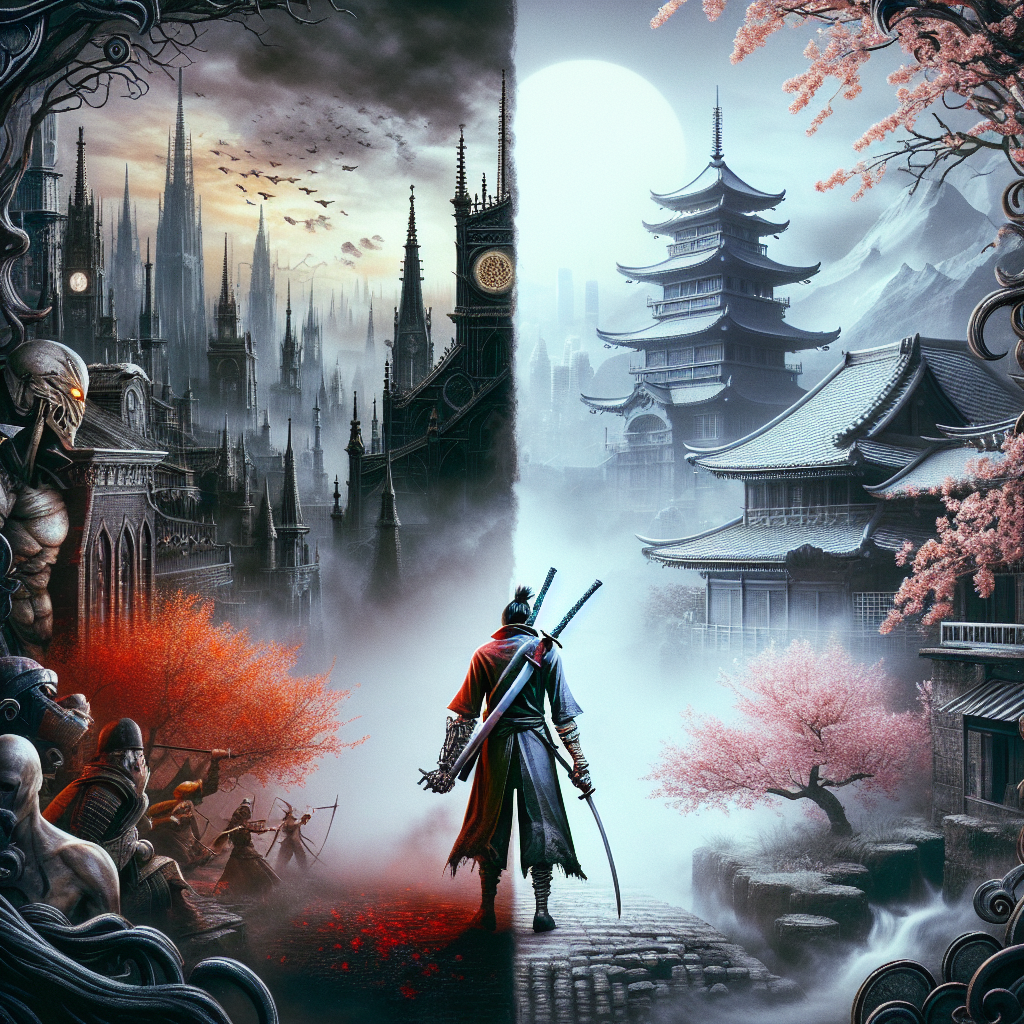
“Bloodborne” and “Sekiro: Shadows Die Twice” share the distinctive hallmark of FromSoftware’s craftsmanship, yet they diverge in key gameplay mechanics that define their unique identities. “Bloodborne,” true to its gothic horror aesthetic, emphasizes aggressive combat, rewarding players for relentless offensiveness. Its combat system integrates risk and reward through mechanics like the “Rally” system, which allows players to regain lost health by quickly counter-attacking enemies. Weapons in “Bloodborne” are transformable, offering versatility and innovative playstyles. This design invites players to experiment and adapt, tailoring their armor and weapon choice to suit their approach, whether it be direct confrontation or strategic planning.
In stark contrast, “Sekiro” prioritizes precision, timing, and stealth. Its combat is meticulous, centered around posture and parrying rather than sheer aggression. The signature “Posture” and “Deathblow” mechanics are instrumental, pushing players to break enemy stances for finishing blows rather than depleting health bars alone. Stealth is integral, allowing for discrete takedowns and avoiding direct confrontations when possible. The “Shinobi Prosthetic” adds layers to the combat, offering various tools like grappling hooks, shuriken, and flamethrowers that complement the katana-centric combat and integrate seamlessly into the world’s vertical design.
Narrative and World-Building
“Bloodborne” is steeped in mystery, crafting a narrative through environmental storytelling and cryptic dialogue. Set in the decrepit city of Yharnam, it presents a tale interwoven with Lovecraftian horror and gothic themes. The player, assuming the role of a Hunter, uncovers the dark secrets of the city plagued by a beastly scourge. Its storyline is fragmented and abstract, encouraging players to draw connections amidst chaos and madness. The world-building extends beyond visible architecture to encompass lore found in intricate item descriptions and subtle environmental cues. Each discovery feeds into the ominous atmosphere, constructing a world that seems both expansive and suffocating.
“Sekiro,” while also cryptic to a degree, offers a more direct narrative focus. Set in late 1500s Sengoku Japan, it follows the journey of a lone shinobi, Wolf, on a quest to rescue his kidnapped lord and seek revenge. Its plot is more linear and character-driven compared to “Bloodborne.” The central theme of honor, redemption, and the cyclical nature of life and death is persistent throughout, with narrative beats conveyed through cutscenes and dialogues that provide clarity and emotional depth. The vivid historical setting serves as a backdrop for tales of loyalty and betrayal, enriching the experience with cultural nuances specific to the era.
Visual Style and Atmosphere
The visual distinction between “Bloodborne” and “Sekiro” is stark yet artistically consistent with their themes. “Bloodborne” thrives in its gothic horror aesthetic, with its visual style characterized by dark, foreboding environments steeped in decay. The design of Yharnam and its surrounding areas reflects an oppressive atmosphere, one that invokes a sense of dread and unease. Its palette is dominated by shadowy hues and intricate textures that evoke a world lost to time and terror. The creature designs, borrowing from Lovecraftian inspirations, add grotesque beauty to the game’s visceral ambiance.
“Sekiro” diverges by embracing a vivid portrayal of feudal Japan. The environmental design is bright and detailed, showcasing lush landscapes alongside war-torn remains. This juxtaposition of beauty and brutality is central to its visual narrative. With precise architectural details and dynamic weather changes, “Sekiro” captivates players with its fusion of realism and myth. Its character and enemy designs reflect both the elegance and ferocity of the era’s warriors and spirits, reinforcing the balance of life, death, and rebirth that permeates the game’s theme.
Difficulty and Challenge
FromSoftware is renowned for crafting experiences that challenge players intensely, and both “Bloodborne” and “Sekiro” adhere to this reputation, albeit in different manners. “Bloodborne” challenges players to harness their aggression strategically, punishing hesitation with formidable foe encounters. The game’s difficulty scales with its punishing yet rewarding combat mechanics, demanding swift reflexes and adaptability. The lack of a numeric health bar for enemies elevates tension, making fights feel perilous and unpredictable.
“Sekiro,” however, redefines difficulty through a relentless focus on skill mastery. Its combat system is unforgiving but fair, requiring precise timing and strategic exploitation of enemy weaknesses. Boss battles, notorious for their intricacy, demand an understanding of mechanics so profound that mastery feels like an art form. This precise combat is coupled with a learning curve that is steep and, at times, brutal, necessitating practice and patience. Unlike “Bloodborne,” exploration is driven by a linear progression, channeling players through increasingly challenging scenarios that loop into the game’s central narrative.
Role-playing Elements and Character Customization
“Bloodborne” adopts a more traditional role-playing approach compared to “Sekiro,” offering players a variety of character builds and playstyles. Its progression system allows for leveling up attributes such as strength, skill, and endurance, giving players flexibility in character development. Weapon upgrades and blood gem enhancements further personalize the Hunter’s journey, allowing for tailored combat styles that can align with player preferences, be it swift dexterity or brute strength.
Conversely, “Sekiro” departs from RPG conventions by focusing on a set protagonist with fixed skills rather than a customizable avatar. Skill trees still play a vital role, enabling players to learn new abilities tailored to different combat situations. The progression is more about skill acquisition and the enhancement of the protagonist, rather than statistical growth. This design choice reinforces the game’s core narrative experience, ensuring that the story of Wolf remains tightly woven into the gameplay, underscoring his journey in the process.
Music and Sound Design
The sound design in both “Bloodborne” and “Sekiro” is intricately crafted to fit the thematic elements of each game. “Bloodborne” employs an orchestral score that accentuates its horror aesthetics. The music rises with intensity during combat, underscoring the brutality and urgency of the encounters. The ambient sounds, from the echoing footsteps to the distant howls, create an immersive soundscape that bolsters the terrifying atmosphere of Yharnam.
“Sekiro” opts for a soundtrack that draws heavily from traditional Japanese music, intertwining it with modern orchestral elements to evoke the rich cultural setting. Its sound design aids in the immersion within the historical backdrop, embracing both tranquility and tension depending on the scenario. The subtlety of atmospheric sounds, like the rustle of leaves or the distant clash of swords, enriches the experience of traversing Japan’s war-torn environments.
Replayability and Post-Game Content
The replay value in “Bloodborne” is amplified by its expansive lore and multiple endings. The lack of a clear narrative path invites players to revisit the game, uncovering hidden aspects and uncovering different interpretations of the story. With DLC content like “The Old Hunters,” new challenges and story elements extend the gameplay experience, providing an opportunity to explore areas filled with stronger enemies and richer lore detail.
“Sekiro,” while more linear in its narrative structure, still offers a significant replayability factor through its challenging combat system. The game includes multiple endings, each contingent on player choices throughout the narrative, inviting multiple playthroughs to experience the breadth of the storyline. The “New Game Plus” mode increases difficulty, offering seasoned players a tougher challenge, and giving new life to its already challenging combat encounters.








Post Comment