Half-Life 2: Celebrating its Groundbreaking Graphics
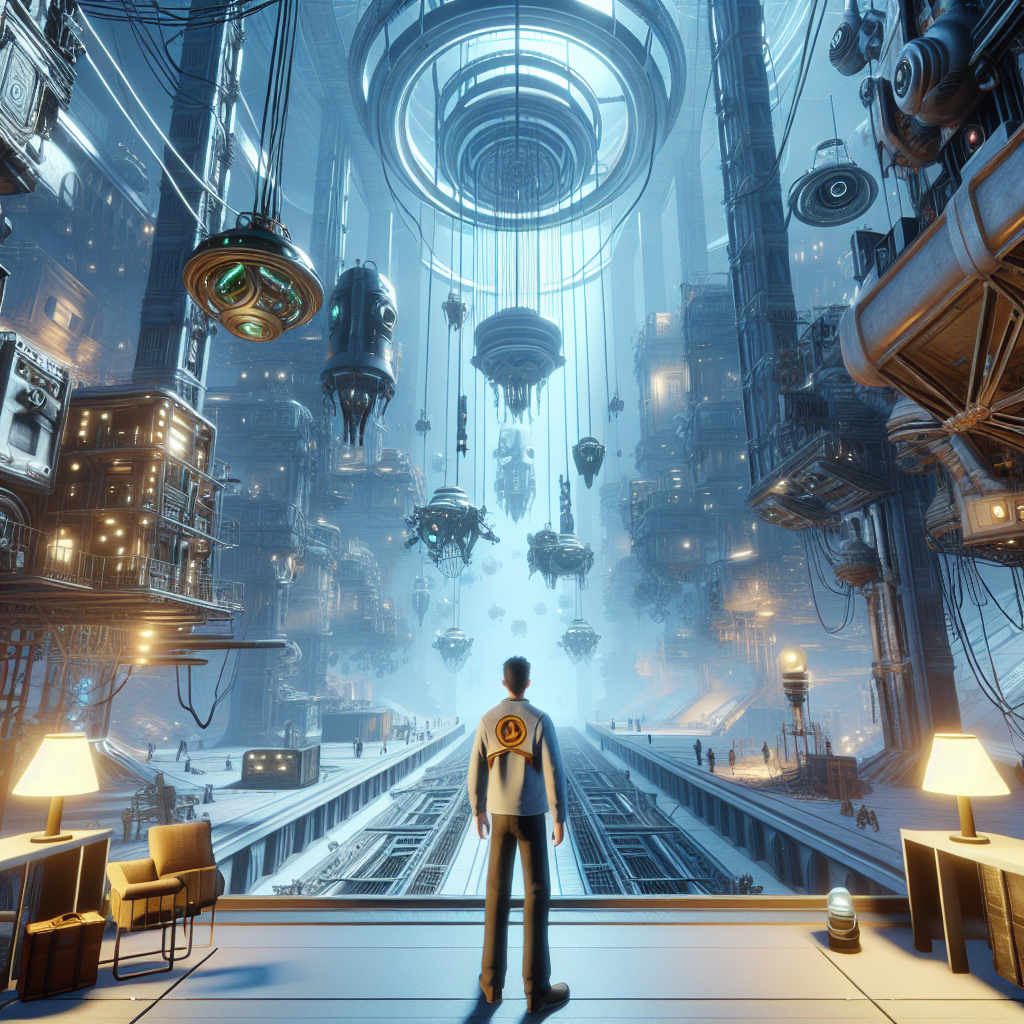
In 2004, the gaming industry witnessed a monumental leap in visual storytelling with the release of “Half-Life 2”. Not only did it build upon the success of its predecessor, “Half-Life”, but it also set new standards for graphics in video games. Developed by Valve Corporation, “Half-Life 2” utilized the Source engine, which was a breakthrough in game development technology, making it a topic of discussion among both developers and gamers alike. This article explores the various aspects of its groundbreaking graphics that made “Half-Life 2” a landmark in gaming history and examines its lasting influence on the industry.
One of the most striking features of “Half-Life 2” was its use of advanced physics. The integration of realistic physics was largely due to the Source engine’s capability to model extensive details in the game environment. The physics engine in “Half-Life 2” allowed for unprecedented interactive environments, where objects behaved as they would in real life. This level of realism was not commonly seen in games of that era. Players could manipulate objects, like crates or barrels, adding a new layer of strategic gameplay. The use of the Gravity Gun emphasized this feature, giving players the ability to pick up and launch objects, further immersing them in the game’s world.
The realism extended beyond just object manipulation. The game’s graphical prowess was evident in its detailed textures and lifelike character models. Valve’s attention to detail was meticulous. Characters exhibited expressive facial animations that conveyed emotions effectively, thanks to the advanced facial animation system. This system used a detailed skeletal animation technique combined with dynamic facial expression technology. Characters like Alyx Vance became memorable not just because of their narrative importance but due to their lifelike animations which were leagues beyond most contemporaries.
Lighting played a crucial role in enhancing the visual aesthetics of “Half-Life 2”. The Source engine enabled dynamic lighting effects that added depth and mood to every scene. The game employed a radiosity lighting system, which simulated how light behaves in the natural world, bouncing off surfaces to illuminate a space realistically. This approach contributed significantly to the game’s immersive atmosphere, allowing players to feel as if they were truly a part of City 17’s bleak and dystopian environment.
The outdoor environments of “Half-Life 2” demonstrated significant advancements in rendering technology. Valve’s Source engine supported HDR (High Dynamic Range) rendering, which adjusted to mimic how human eyes perceive light and shadow. This effect was particularly noticeable in environments with stark contrasts, such as sunlit outdoor areas juxtaposed with dark interiors. The blend of HDR lighting with complex shadow mapping enabled dramatic vistas and breathtaking scenes that left a lasting impression on players.
Furthermore, Valve implemented sophisticated water effects that were groundbreaking at the time. The water in “Half-Life 2” reacted intuitively to player and environmental interactions, such as splashes, waves, and reflections. The water’s clarity and realistic movement added to the game’s immersive quality. Whether traversing the canals on the airboat or observing the reflection of distant landscapes, these water effects underscored the attention to detail that characterized the game’s graphical achievements.
“Half-Life 2” also benefited from its adept use of level design to showcase its graphical capabilities. Each chapter of the game offered varied settings, from urban decay in City 17 to the eerie, zombie-infested town of Ravenholm. The level designers meticulously crafted each area, utilizing the Source engine to maximize visual storytelling. The seamless loading zones within these levels helped maintain immersion, letting players remain fully engaged without interruption. The flow of the environments was carefully constructed to guide players intuitively, enhancing their immersion through visual cues and intuitive spatial design.
The game’s audio design complemented the visuals, heightening the overall experience. Although audio isn’t a visual aspect, the synergy between sound and graphics in “Half-Life 2” created an immersive experience that engaged multiple senses. The soundtrack and sound effects were intricately designed to match the visual intensity, creating a cohesive atmosphere that was as memorable as the game’s stunning graphics.
Moreover, the graphical innovations in “Half-Life 2” had a lasting impact on the gaming industry as a whole. Many of the techniques and technologies pioneered by Valve became standards in game development. Realistic physics, advanced lighting, and detailed animations became central aspects of many subsequent games, pushing the industry toward more immersive and visually stunning experiences.
The modding community also benefited from the graphical advancements of “Half-Life 2”. The Source engine was designed with modders in mind, allowing for extensive customization. This extensibility not only prolonged the life of “Half-Life 2” but also paved the way for future mods and independent projects. Games like “Garry’s Mod” emerged from this community, leveraging the graphical and physical capabilities of the Source engine to create entirely new experiences.
In the years since its release, “Half-Life 2” has been subject to ongoing analysis and admiration. As technology continues to advance, the game remains a benchmark for quality in video game graphics. Its contribution to the art and science of game development is undeniable, serving as a reference point for aspiring developers and artists.
In conclusion, “Half-Life 2” represented a milestone in video game graphics through its masterful use of the Source engine, advanced physics, and detailed visual storytelling. The game not only provided a visually stunning experience for its time but also influenced the direction of future games, establishing itself as a key reference in discussions about the evolution of video game graphics. As we celebrate its achievements, it’s clear that “Half-Life 2” continues to hold an esteemed place in gaming history, as both a technical marvel and an enduring inspiration in the world of interactive entertainment.







Post Comment